
Life’s Unexpected Turns
At one point in time, life threw us a curveball when our family situation took an unexpected turn. We had to say goodbye to the home we had built and leave behind our real estate assets. But amidst this difficult period, good news appeared, our fixer upper property in the countryside was vacant. We were getting ready to make it livable and put it on the market to sell. We took it as a sign, because we needed a place to resettle and quickly. Overall- it was further out from our city dwelling than we were used to, but it checked off all of the boxes we needed to make a quick move.
While the house itself required major renovations, it was the perfect fit for us, providing ample space for our equipment, material, trailers, and trucks. My husband, the General Contractor, reassured me that the house had “good bones” and with his skills taking the lead, there wasn’t much he couldn’t fix or make livable for us. So we packed up our things and moved in, knowing that this would be a long journey filled with various fixer-upper projects along the road.
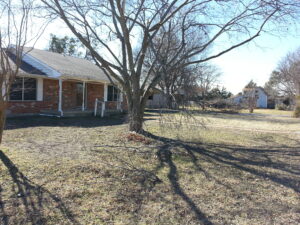
However, before we could truly settle into our new home, there were some necessary tasks that needed to be taken care of. Since the property had been empty for a while, there were immediate, services, repairs, and renovations that needed to be done in order to make it livable. But with my husband’s expertise and determination, we were ready to tackle the necessary repairs.
Our checklist of Necessary Repairs
Our vacant fixer-upper had spent more time with critters than with humans, and we had some damage to restore. Our required repairs before move in looked something like this:
- Connect the sewer line from the house to the septic tank. Yikes! Where had all the waste been going before this?! (Of course, this was first on the list!)
- Replacing the tattered carpet hiding years of history? Ripped up and refreshed with a coat of Kilz paint and some sturdy indoor-outdoor carpet to tide us over.
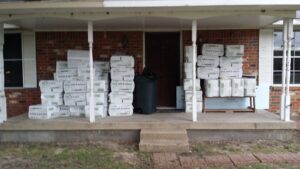
- We were heating and air conditioning a good part of the country. The insulation in the attic was not in good shape. We rented an insulation blower from Home Depot and did our own insulation. We made a good team – my husband was in the attic blowing insulation and I was on the front porch filling the hopper with bags of insulation as my husband blew insulation into the attic.
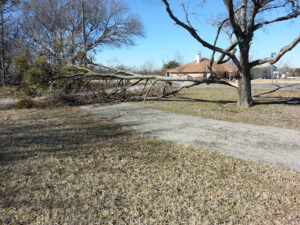
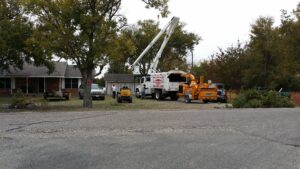
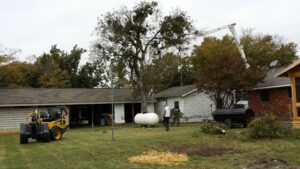
- Mother nature decided to trim our trees with an ice storm. There were limbs broken off and all across the lawn and driveway. We trimmed the trees we could safely do to lessen the cost, and hired a crew to come in and trim some of the tall trees in the backyard that we did not feel safe removing.
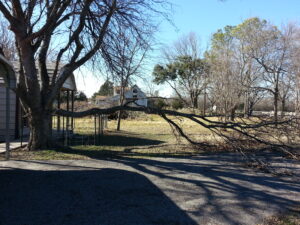
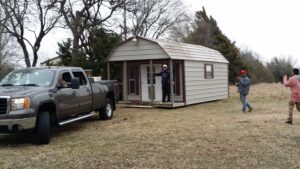
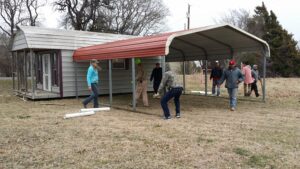
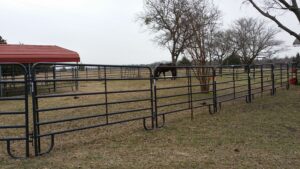
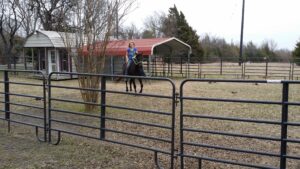
- With additional work we used a Morgan Building, two car carport, that was already on our property, horse panels, and part of our front yard to create a paddock for our horse. It was a scene right out of the old wild west. We hooked up the Morgan Building to one of our trucks and towed it through the yard to the other side of our property and set it where it would work for the new horse paddock on site. We took an army of men, put rollers under the carport and move it to the other side of the lot, right next to the Morgan Building. Adding the horse panels we had, we had a horse paddock right in my front yard.

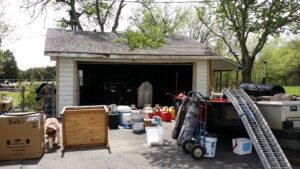
- The property had a detached two car garage that was literally leaning to one side. Normally we would demo this garage and start fresh. We did not have any money for any repair costs that was not not necessary to move in right away. Our situation we were leaving, left us broke, and we needed to get out as quick as possible. So, my general contractor husband took his big heavy scaffolding equipment and leaned it on the side to help stabilize and make it temporarily safe. We used pallets to put our equipment and material supplies that needed to be under cover inside the garage. That needed to be good enough for move in!
- We patched up the old chain link fence in our backyard. This provided a safe place to let our dogs out and keep them separate from the horse paddock.
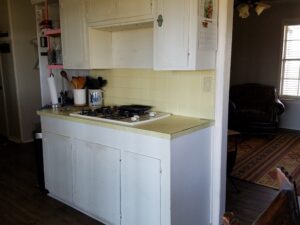
- We did the best we could with no budget, and made our 70s-era kitchen usable for the lowest cost possible. The double oven had damage and needed to be fixed, so I used it for some much needed cabinet space. We put a coat of white paint on the dark brown cabinets. It came with vintage yellow Formica countertops and yellow tile backsplash. Only the propane cooktop worked. First time for everything, doing meal prep without an oven!
Moving into an old house there is a good deal that goes on with our emotions too!
Emotions were running high as we navigated the challenges that came with moving into our fixer upper. From feelings of excitement and hope to frustrations and stress, our emotions were constantly fluctuating during this period of change. Leaving circumstances with family that did not turn out the way all of us had hoped for. It was hard to say goodbye to the home that we thought was our last one to build and retire in.
Whether we are moving into our first home, building our dream home, remodeling the current home and making it our dream home, it also remodels our own emotions, health, and relationships. (Which we never expected!) Our home is our castle, our place where we go to sleep, eat, live, grow a family, a roof over our head. If our home, where we live, is not in order, we sometimes forget what it does to us as well. I call it remodeling ourself! When we pull away our safety net, it exposes all the things inside of us and brings them out in the raw, hidden, emotions, if we are not ready for it. I compare it to taking down the sheetrock and you get to see what has been behind that painted wall all this time. For example, in the walls of this fixer upper old house, there has been snake skins, dead bugs, feces from rodents, it also stinks, and is musty smelling.
When we have done this in this fixer upper, we put on masks, seal off that part so it does not go into our parts of the house we are living in, before we do demo. All the construction demo is also what happens in our mind as well. I don’t think we can ever be 100% ready and ok, but plenty of preparation, physically, mentally, and yes even spiritually puts safety things in place for a more successful new build or remodel project.
Moving into our fixer-upper has come with its own set of challenges and emotions. But it’s important to remember that these challenges can also serve as opportunities for growth and self-discovery, even for a team married for 47 years! Even though the projects took longer than our original estimate, with patience, determination, and a positive attitude, we are transforming our run-down house into our dream home, and in turn, transforming ourselves. Adding much more value to our home than just the market price!
Thank you for joining us on this transformative journey through our fixer-upper adventure. I’m immensely grateful for your support and interest in my Fixer Upper’s story. For more insights, tips, and inspiring tales of transformation, I’m invite you to subscribe to the Your Remodeling Coach email list. Stay connected with Your Remodeling Coach as I continue to share my passion for turning my fixer-upper challenges into our dream home achievements.

What a great read!!! Coleen! It’s inspired me to get up and do something to my environment! Since I have no money or know-how to renovate on this Sunday afternoon, I guess I’ll do laundry and clean out my dresser drawers! Lol so inspired— keep writing friend!
There is some pre-planning to remodeling! So glad you enjoyed it. I am “fix-in” to start Phase 3 of my fixer upper.